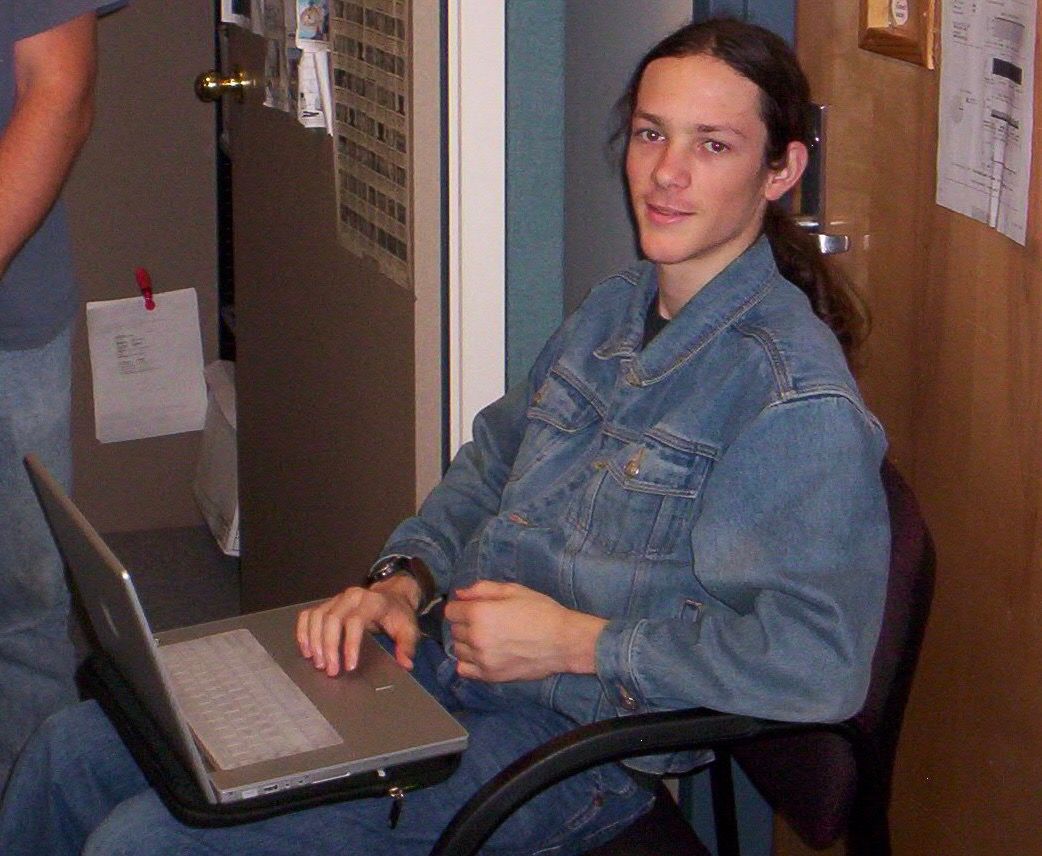
Last month I re-learned something that is obvious to any seasoned photographer: What you already own is usually perfectly good enough. Back in 2016, I bought a Panasonic Lumix GX8 and while I loved its video capabilities, I was consistently disappointed by the photos. Despite owning both a zoom and a prime lens, every image came out frustratingly soft.
The real kicker came with the arrival of the iPhone XR which took sharper photos (although at a lower resolution). I gave up on “real” camera photography for years due to making an amateur mistake of blaming sensor technology for my image quality problems. My assumption was that if my phone's tiny sensor could outperform my dedicated camera, my Panasonic must be outdated. Yet when I started film photography in January, I had a completely different mindset. I knew right away that the lens mattered more than the “sensor” (the film) did. I focused (pun intended) on purchasing the best lenses my budget could afford. For some reason, this fact didn't register for my digital setup until a few weeks ago.
A few months ago, I climbed the volcano Acatenango in Guatemala with four of my best friends. It was a disaster of a trip on so many levels, but thanks to being able to spend quality time with people I love, I had a good time. I did, however, lose my Apple Watch, AirPods, my wallet with my ID and all my credit cards, and some additional camping equipment when I accidentally kicked them off a cliff during the worst tropical rainstorm I've ever seen. It appears that Guatemalan adventures and I are developing an expensive electronics destruction habit.[1]
As soon as I regained internet, I re-ordered and re-purchased replacements for everything I lost, except the Apple Watch. My reasoning at the time was that it was silly to buy a watch in June when new ones were going to come out in September. But as September 9 approaches, I am no longer certain I'll replace my watch at all.
This surprised me because I was an Apple Watch early adopter. I woke up at 5 a.m. to place an order for the very first Series 0 watch in 2015. That piece of crap was barely fast enough to tell the time (let alone any “smart” activities), but at the same time it was absolutely amazing to have a tiny computer on my wrist. I began to rely on the watch as a notification proxy and then quickly as a health-tracking device.
It may seem silly to celebrate the anniversary of my first Mac purchase, which I named Serenity (after the Firefly-class vessel from the TV show by the same name). But it is not silly, because without that machine which I unboxed 18 years ago today, I would not be who I am.
In an interview with Russ Roberts on EconTalk, author and futurist Kevin Kelly convincingly suggests that we should treat AIs like Midjourney and ChatGPT as alien intelligences (in a non-spooky way):
I've been using the AI image generators for a year now, every day making AI art and they have different personalities...
But in every case, they're alien—the way that they do things because they're running on a different substrate than, than what we run on.
Their creativity is legitimate. It's really creative, but it's off, it's different than us. It's different, it's alien. They have a slightly different alien way of doing it. And that is, it's true benefit.
That's the main reason why they're valuable is because they're not doing it like humans. When they start to do proofs, they're not gonna do it like a human does it.
If they have/when they have consciousness, it'll be slightly different. It will be akimbo from us because it's running on a whole different thing. It's different latencies in all different ways in which is gonna be different. And that is its benefit.
If you're curious or confused by all the hype about the Twitter-like social network called Mastodon, but all the jargon and tech lingo are giving you cold feet about trying it out, this three-point guide is all you need to get started.
Just like you don't have to be a mechanical engineer to drive your car, you don't need a tech degree to use Mastodon. If you've used email, Facebook groups, or Twitter, you are 1/3 to 3/3 of the way to understanding Mastodon.
It's Similar To Email
Maybe you're [email protected], or bob@gmail, or [email protected]. You're that person who signed up for an email account from one company years ago but you don't think twice about sending mail to your friends whose addresses have a different company after the @-symbol than you.
If you’ve gotten in an intense argument on Twitter, you might dread this “So-and-so liked 10 Tweets you’re mentioned in” notification. It tends to mean someone went through and gave kudos to every person arguing with and insulting you. It’s stressful to be pinged over and over with this—which is exactly why we’re all tempted to do this to people we think crossed a line. In doing so, we, again, increase the reach of content we dislike.
The other features he mentions are quite refreshing too.
Also, as of today Mastodon has over 1 million active users! 👀
Hey, so, we’ve hit 1,028,362 monthly active users across the network today. 1,124 new Mastodon servers since Oct 27, and 489,003 new users. That’s pretty cool.
Every five to ten years, a popular social network gets hit with a crisis. Twitter's current Musk-y crisis feels precipitously different than its previous ones.
Today I came across a thread by John Bull that introduced me to the perfect word to describe 2022 Instagram and Twitter: The trust thermocline. It describes the sudden point in which various individuals lose trust in an an institution or organization en-masse.